x




The race for artificial intelligence supremacy is entering a new, highly contested chapter. As businesses around the globe rush to adopt autonomous AI agents to handle everything from supply chain logistics to routine customer service, a critical hurdle remains: data sovereignty and privacy. For European enterprises bound by stringent regulatory frameworks, deploying US-centric or poorly governed AI models has felt like walking a regulatory tightrope.
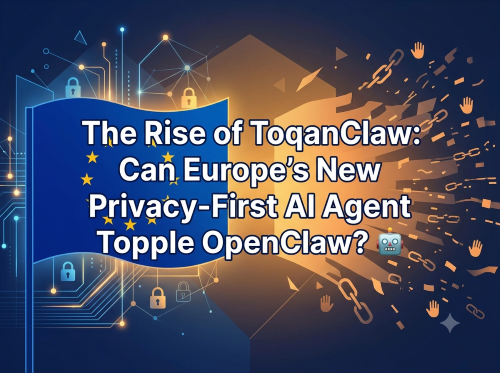
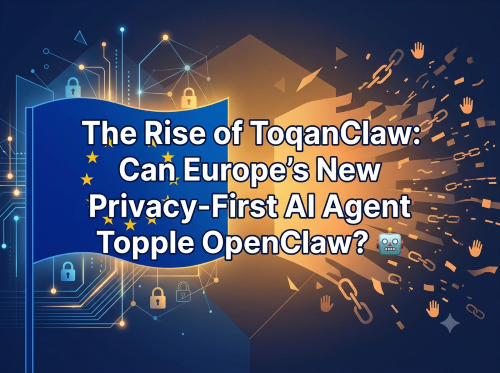
Enter Prosus. The European tech investment titan has officially thrown its hat into the ring with the launch of ToqanClaw, a sophisticated, no-code AI platform designed to let businesses build custom tools and workflows using nothing more than natural language prompts. Positioned squarely as a secure, GDPR-compliant alternative to dominant systems like OpenClaw, ToqanClaw promises to bring the power of advanced AI automation into a tightly controlled environment where data never leaves European soil.
At its core, ToqanClaw is a no-code ecosystem designed to democratise AI automation for businesses that lack deep technical resources. Instead of hiring teams of software engineers to write complex scripts, a manager can simply describe a business need in plain language, and ToqanClaw will build the corresponding automation tool.
What sets it apart from the competition is its underlying infrastructure. Built entirely in-house and integrated with Prosus’ proprietary AI platform, Toqan, the platform addresses the precise vulnerability that makes traditional AI agents a liability for risk-averse legal teams: third-party data leakages.
Traditional AI agents frequently rely on a web of external plug-ins, APIs, and secondary services to execute tasks. Every time an agent fetches a piece of data or calls an external tool, that information is potentially exposed to third-party providers. Prosus has engineered ToqanClaw to keep all operations within its own secure perimeter. Your data is strictly kept under your control and is completely barred from being used to train external models.
The launch of ToqanClaw comes at a pivotal moment for technology regulation in Europe. Leading AI agents and identity frameworks, such as OpenClaw and Hermes, have drawn escalating scrutiny from data protection authorities across the continent. Notably, German regulators have recently taken strict enforcement actions against biometric data practices in identity systems, signalling that Europe will not tolerate a "move fast and break things" approach when it comes to personal privacy.
By guaranteeing strict compliance with the General Data Protection Regulation (GDPR), ToqanClaw offers a sanctuary for organisations that want to innovate without the looming threat of massive regulatory fines. By ensuring data stays under local control, Prosus is capitalising on a growing demand for sovereign IT infrastructure — a trend that could fundamentally reshape how multinational corporations select their enterprise AI tech stacks.
Prosus isn't just launching on theory; the platform is already being rolled out across a massive network encompassing more than five million restaurants, merchants, and entrepreneurs. Early case studies from the field suggest that the operational benefits are both immediate and substantial.
For example, a Dutch café chain utilising ToqanClaw successfully reduced its financial reporting timelines from several weeks to just 30 minutes. This massive efficiency gains freed up leadership to focus on expansion, helping the business register an impressive 40% year-on-year revenue growth. Another partner logistics firm managed to increase its total deliveries by 25% while simultaneously slashing employee overtime by 60%, demonstrating how intelligent task orchestration can drastically lower operational overheads.
ToqanClaw’s ability to deliver these results relies heavily on Prosus' proprietary Large Commerce Model (LCM). Trained on anonymised data from more than a billion customers and hundreds of millions of daily commercial interactions, the LCM gives ToqanClaw a unique edge over generalised language models.
Rather than just passively reacting to user commands or executing basic static tasks, this specialised commerce model allows AI agents to analyse patterns, interpret commercial context, and actually anticipate what a business needs next.
While ToqanClaw handles the heavy lifting for enterprise automation, Prosus is simultaneously looking at how this technology shifts the consumer landscape. Alongside the business platform, the company is introducing Zapia, a consumer-facing digital assistant tailored for everyday tasks.
The strategic vision here is to eliminate the friction of modern smartphone usage. Prosus CEO Fabricio Bloisi noted that the future of the consumer internet will shift away from navigating dozens of fragmented apps to complete a single goal. Instead, users will simply dictate their desires to a singular, trusted assistant — whether that involves planning an entire week's itinerary, booking travel, or instantly comparing retail prices — and the AI will execute the entire workflow in the background.
With ToqanClaw tackling the enterprise market and Zapia aiming for consumers, Prosus is mounting a formidable, privacy-centric challenge to Silicon Valley's AI hegemony. For businesses watching their compliance boundaries closely, the AI agent race just got a lot more interesting.
To find out more and read the original reporting on this story, visit the full article on Decrypt:
👉 A New OpenClaw Competitor: ToqanClaw Promises Privacy in AI Agent Race
Disclaimer: This article is provided for informational purposes only, mistakes may be made, and it's not offered or intended to be used as legal, tax, investment, financial, or any other advice.