x




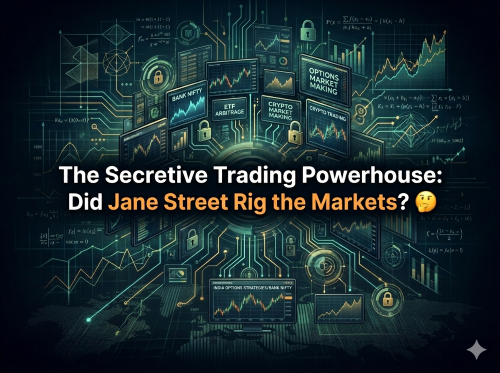
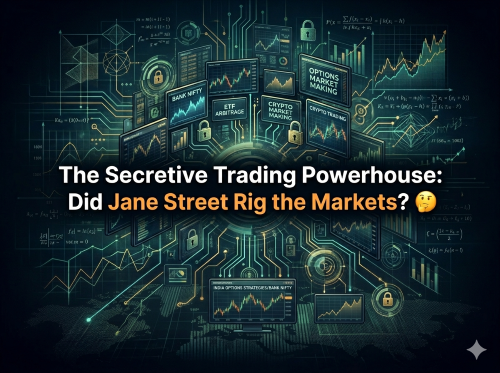
In the world of high finance, names like Goldman Sachs and JP Morgan typically dominate the headlines. However, a quiet revolution has taken place, and a private trading firm most people have never heard of is now outperforming the giants of Wall Street. Jane Street, a highly secretive firm based in New York, recently reported a staggering $39.6 billion in net trading revenue for 2025. This figure doesn't just rival the big banks; it dwarfs them.
To put this in perspective, Goldman Sachs’ entire global markets division brought in roughly $31 billion in the same period. While Goldman employs over 46,000 people and operates under intense regulatory scrutiny, Jane Street achieved its massive revenue with fewer than 3,500 employees and almost no public disclosure. This shift marks a fundamental change in the plumbing of global finance, moving power away from regulated banks and into the hands of "shadow" trading institutions.
Jane Street’s astronomical growth is driven by four primary business segments. The first is ETF arbitrage. Jane Street is one of the few firms globally that sits inside the creation and redemption pipeline for exchange-traded funds. They control nearly a quarter of the entire U.S.-listed ETF primary market, capturing tiny price discrepancies every single day.
The second engine is options market making. The firm has a dominant position in equity index options, with roughly 87% of its massive portfolio tied to derivatives. The third pillar is fixed income "electronification," where they have systematically taken market share from traditional bond desks at major banks by using algorithmic execution. The fourth engine, which has recently sparked global controversy, involves complex derivatives trading in emerging markets like India.
The firm's meteoric rise has not come without friction. In 2025, India’s market regulator, SEBI, banned Jane Street from Indian markets. The regulator accused the firm of manipulating the "Bank Nifty" index to generate approximately $4.3 billion in profit. According to the allegations, Jane Street used its massive market-making firepower to push the underlying stock index toward levels that would maximize payouts on their specific options positions.
While Jane Street disputes these claims, the situation highlighted the firm's immense influence. Interestingly, Jane Street indirectly confirmed the value of these strategies by suing a competitor, Millennium Management, alleging that former employees stole proprietary "India option strategies." This rare public legal battle signaled to the world just how much money was at stake in these secretive trades.
Beyond traditional stocks and bonds, Jane Street has become a titan in the digital asset space. In 2024, they tripled their crypto trading volumes, purchasing over $110 billion in cryptocurrencies and stablecoins. They serve as an "Authorized Participant" for the world's largest spot Bitcoin ETFs, such as BlackRock’s IBIT.
Crypto markets are a perfect environment for Jane Street’s technology-heavy approach. Because these markets operate 24/7, feature fragmented liquidity, and lack the heavy regulations that keep big banks on the sidelines, Jane Street can capture wider spreads and higher volatility. This dominance means that if you have traded Bitcoin or a Bitcoin ETF recently, Jane Street was likely on the other side of your trade.
The rise of Jane Street represents a broader trend in the financial world. Publicly listed banks like Morgan Stanley and Citigroup are heavily regulated, capital-constrained, and required to make frequent public disclosures. In contrast, private firms like Jane Street, Citadel Securities, and Susquehanna operate with far less external scrutiny.
These firms are not classified as "systemically important financial institutions," meaning they sidestep many of the strict capital requirements imposed on banks after the 2008 financial crisis. They don't hold customer deposits, and they aren't subject to the Volcker Rule, which limits proprietary trading. This lack of constraint allows them to take on massive risks and use superior technology to dominate everything from retail equity orders to complex global derivatives.
For the average investor, this shift is often invisible but impactful. When you place a trade on a "free" platform like Robinhood, your order is rarely sent to a public exchange like the New York Stock Exchange. Instead, it is routed to "wholesalers" like Jane Street or Citadel. These firms pay brokers for your "order flow" because they can profit from the execution.
While "zero-commission" trading seems free, studies suggest that execution quality can vary significantly. Investors are often trading against the most sophisticated algorithms on the planet, housed in firms that have more information and faster technology than any individual could hope to possess. As these private firms continue to grow, the true power of Wall Street no longer resides in the famous towers with logos on top, but in the server rooms of secretive firms that operate in the shadows.
Coin Bureau - Did Jane Street Rig the Market To Make Billions?
"What if the biggest financial powerhouse wasn't a bank, but a private firm you've never heard of? Jane Street just shocked the world with $40 billion in revenue, beating Goldman Sachs, JPMorgan, and all the Wall Street titans. But how did they do it, and what are they hiding?
Join Guy as he uncovers the secrets behind Jane Street’s explosive rise, the regulatory charges against them for market manipulation, and why their hidden moves could change the way your investments work. If you think the markets are safe, think again."
~ TIMESTAMPS ~
0:00 – $40B Secret Firm Bigger Than Wall Street Giants
2:26 – How Jane Street Makes $11M Per Employee
4:01 – The 4 Hidden Engines Driving Massive Profits
5:34 – $4.3B Market Manipulation Allegation Explained
7:23 – The “Crown Jewel” Strategy They Tried to Hide
9:12 – Why Jane Street Dominates Crypto Markets
12:20 – Terra/Luna Lawsuit & Insider Trading Claims
15:41 – The Truth About Your Trades (Who You’re Really Trading Against)
Source 👉 https://www.youtube.com/watch?v=HUsG_o2E29k
Disclaimer: This article is provided for informational purposes only, mistakes may be made, and it's not offered or intended to be used as legal, tax, investment, financial, or any other advice.