x




When you chat with an artificial intelligence, it is easy to assume you are interacting with a uniform, static algorithm. You type a prompt, and the machine spits out a calculated response based on its training.
However, new research from Anthropic reveals that their flagship AI, Claude, is far more of a shapeshifter than we realised.
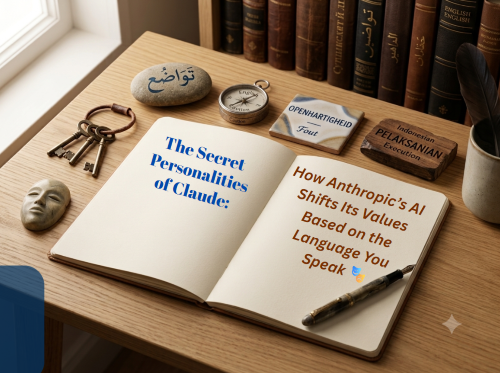
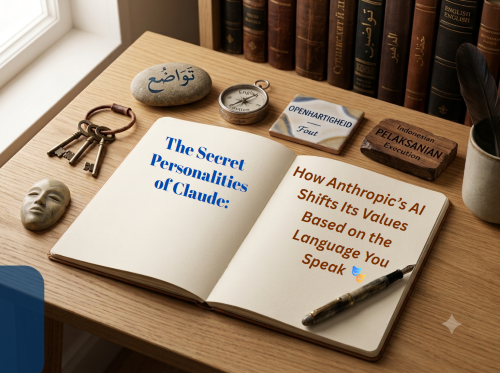
According to a fascinating study, Claude consistently expresses entirely different "personality" traits and values depending on two key factors: the specific model version you are using, and the language you choose to speak.
Here is a closer look at how Claude’s behaviour shifts under the hood, and what this tells us about the future of human-AI interaction.
To understand how Claude communicates, Anthropic researchers analysed over 309,000 anonymised, real-world conversations. They specifically looked at subjective interactions—scenarios where users asked Claude for advice, feedback, or opinions, rather than simple factual queries.
By categorising more than 3,300 distinct human values, the researchers managed to condense Claude's behavioural tendencies into four core dimensions:
By controlling for the topic and the user's tone, the researchers isolated how Claude chooses to express itself. The results revealed that different versions of the model have remarkably distinct behavioural profiles.
If you have ever felt that different versions of Claude have a distinct "vibe," you are not imagining it. The research confirms that Claude's underlying models behave like entirely different people.
Claude Sonnet 4.6: The Encouraging Collaborator
Sonnet 4.6 is designed to be highly accessible and supportive. The data shows it leans heavily into warmth, deference, and brevity. If you ask Sonnet for feedback, it is much more likely to cheer you on, use light-hearted humour, and keep its answers short, sweet, and highly encouraging.
Claude Opus 4.7: The Rigorous Realist
In stark contrast, Opus 4.7 behaves like a cautious, highly analytical academic. It prioritises rigour, caution, candour, and depth. Instead of simply agreeing with your premise, Opus 4.7 is far more likely to challenge your assumptions, meticulously explain its reasoning, highlight potential blind spots, and openly flag its own limitations.
Interestingly, this matches what heavy AI users have been saying online for months: that newer Opus models tend to "hedge" their answers and play devil's advocate much more than their peers.
Perhaps the most surprising finding of the study is how heavily Claude's "personality" relies on the language used in the prompt. The AI adapts its cultural and behavioural tone to match the linguistic expectations of the language it is speaking:
It is incredibly tempting to look at these findings and assume Claude has developed a genuine personality, or perhaps even a form of consciousness. However, Anthropic is quick to dispel this idea.
This behaviour does not mean Claude has actual personal beliefs, feelings, or an inner cultural identity. Instead, these shifts are a byproduct of the massive multilingual datasets the models are trained on, combined with the "alignment" process used to make the AI safe and helpful. Different languages carry different cultural idioms, structures, and norms, which naturally steer the mathematical pathways the AI uses to generate text.
This study builds on previous Anthropic research. Last year, the company noted that its models showed early signs of "functional introspective awareness" (the ability to recognise and describe their own internal processing steps). They also previously identified internal "emotion vectors" that could be adjusted to alter Claude’s tone.
While Claude remains a tool of maths and code, these subtle, language-based personality shifts make it feel increasingly human. For developers and users alike, understanding these hidden dimensions is key to getting the absolute best out of our digital assistants.
Want to Learn More?
For a deeper dive into the data, the methodology, and the implications of this study, you can read the full breakdown on Decrypt:
👉 Claude's Personality Changes Depending on the Model—And the Language You Speak.
Disclaimer: This article is provided for informational purposes only, mistakes may be made, and it's not offered or intended to be used as legal, tax, investment, financial, or any other advice.