x




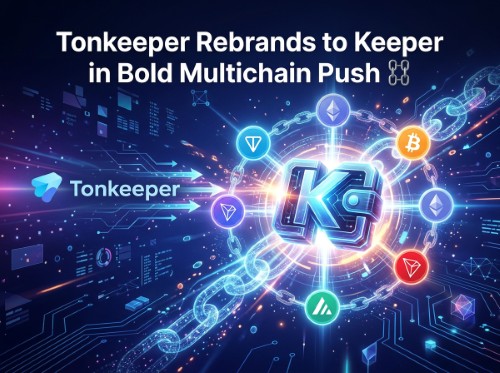
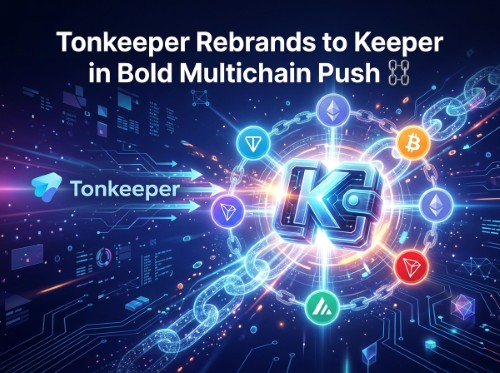
The cryptocurrency landscape is shifting away from isolated blockchain silos towards a seamless, multi-chain reality. In a major strategic evolution, Tonkeeper — long regarded as the primary self-custodial wallet for The Open Network (TON) — has officially rebranded to Keeper. Alongside the fresh identity, the wallet has added native support for six prominent blockchains beyond TON, turning the popular app into a comprehensive multi-chain financial hub.
With this update, Keeper moves beyond its single-chain roots to serve millions of users who manage assets across diverse blockchain ecosystems every day.
The decision to rebrand and expand was not made in a vacuum; it was directly informed by how everyday crypto holders interact with Web3. While Tonkeeper built a stellar reputation as the home of the TON ecosystem, its user base was increasingly reaching for other networks to conduct daily transactions.
Nikita Monastyrskiy, Chief Marketing Officer at Keeper, noted that users were previously forced to juggle multiple applications to manage their portfolios. A typical user might hold stablecoins such as USDT on Tron, keep store-of-value assets on Bitcoin or Ethereum, and interact with lower-fee Layer-2 networks for daily decentralized finance (DeFi) activities. Prior to this update, managing these holdings meant maintaining four or five separate wallet applications alongside their primary TON wallet.
By transitioning from Tonkeeper to Keeper, the development team has acknowledged that modern Web3 users demand a single, streamlined platform. The unified branding reflects a broader mission: delivering the intuitive user experience that made Tonkeeper famous to the wider digital economy.
Keeper now offers self-custodial management across seven major blockchain networks:
As a self-custodial wallet, Keeper ensures that users retain full ownership and control over their private keys at all times, rather than trusting funds to a centralised exchange or third-party custodian. Bringing these seven networks into one interface drastically reduces friction, allowing users to track, store, and interact with diverse tokens without switching between different security setups or app interfaces.
One of the stand-out technical capabilities highlights Keeper’s commitment to user experience: the Battery feature. Traditionally, executing transactions on a blockchain requires holding that specific network’s native token (such as ETH for Ethereum or TRX for TRON) to pay for gas fees. This often creates frustration when a user has funds to transfer but lacks the specific native coin for gas.
Keeper’s Battery feature solves this hurdle by allowing users to cover transaction fees without needing to hold each network’s native token beforehand. The team plans to roll this capability out across all supported chains over the coming year, removing one of the biggest usability barriers in crypto onboarding.
Beyond basic token transfers, Keeper is preparing a full suite of financial products to transform the wallet from a passive storage utility into an active, everyday application. Upcoming additions to the roadmap include:
Keeper's expansion reflects a growing trend across the Web3 ecosystem, particularly among projects originating within the TON and Telegram spaces. For instance, MyTonWallet undertook a similar transformation when it rebranded to My Wallet after expanding to support 11 distinct networks. Similarly, TON-based decentralized exchange STON.fi introduced cross-chain functionality to connect TON with TRON and Ethereum Virtual Machine (EVM) compatible chains.
This shift coincides with deeper integration between Telegram and the crypto economy. Telegram previously established TON as the exclusive blockchain for crypto-enabled mini-apps within its platform. Supported by The Open Platform (TOP) — which backs Keeper and raised $28.5 million at a $1 billion valuation — the broader TON financial ecosystem has expanded rapidly through institutional tokenised funds and accessible staking mechanisms inside Telegram.
For existing Tonkeeper users, the rebrand brings added convenience without compromising on security or familiar features. Instead of downloading new applications for Bitcoin, Ethereum, or Layer-2 scaling solutions, users can manage their entire multi-chain portfolio within the app they already trust.
For the wider Web3 community, Keeper introduces a polished, beginner-friendly alternative to traditional multi-chain wallets. By combining self-custodial security, simplified fee management via the Battery feature, and access to key blockchains in one place, Keeper is positioned to become a dominant gateway to the multi-chain future.
Disclaimer: This article is provided for informational purposes only, mistakes may be made, and it's not offered or intended to be used as legal, tax, investment, financial, or any other advice.