x




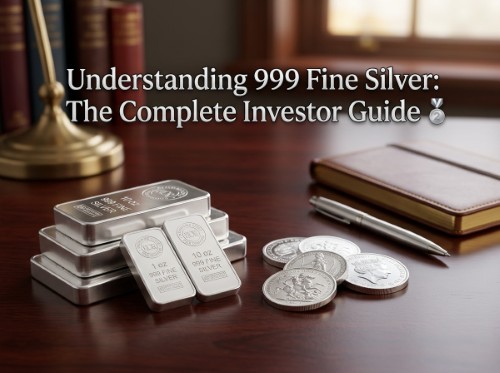
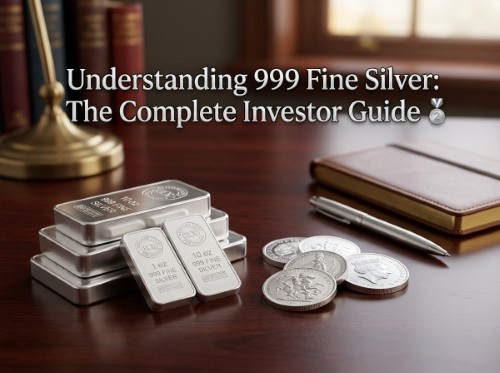
Silver has captivated humanity for millennia, serving as currency, trade collateral, and a reliable store of wealth across civilisations. In the modern financial world, silver continues to hold a prominent position in diversified investment portfolios. However, when exploring the precious metals market, you will quickly encounter technical terms like "999 fine silver", "millesimal fineness", and "troy ounces".
Understanding these terms is critical whether you are looking to buy your first silver coin, evaluate inherited bullion bars, or simply understand how precious metals are priced. This guide breaks down everything you need to know about 999 fine silver, how it compares directly to sterling silver, how to calculate its market value, and the best practices for purchasing and storing it securely.
When a precious metal is described as "999 fine silver", the number refers to its purity measured by the millesimal fineness system. This international standard rates the purity of precious metals by parts per thousand. Therefore, 999 fine silver contains 999 parts of pure silver out of 1000, which equates to 99.9% pure silver, with only 0.1% consisting of trace elemental impurities.
In international trade and bullion markets, 999 fine silver is the recognised global benchmark for investment-grade silver. It is the purity standard used by major sovereign mints and accredited refineries—such as the Royal Mint, the Perth Mint, and the Royal Canadian Mint—to produce investment coins, minted bars, and cast ingots.
Why Is Silver Not Minted at 100% Purity?
Investors occasionally wonder why silver bullion is not minted at a theoretical 100% purity. The reason combines physical chemistry and practical economic realities:
A common point of confusion for buyers is the difference between fine silver and sterling silver. While both consist of genuine silver, their composition, mechanical properties, and intended uses are entirely distinct.
1. Fine Silver (999 Fineness)
2. Sterling Silver (925 Fineness)
In short, if your objective is wearing an elegant piece of jewellery or using durable tableware, sterling silver is the practical choice. If your goal is acquiring physical metal for wealth preservation, portfolio hedging, or bullion investment, 999 fine silver is the definitive standard.
Calculating the monetary worth of 999 fine silver is remarkably straightforward compared to lower-purity alloys. Because fine silver is almost entirely pure metal, you do not need to apply complex purity conversion formulas to determine its intrinsic value.
Understanding the Silver Spot Price
The base value of any fine silver item is driven by the silver spot price. The spot price is the live international benchmark at which raw silver is traded on wholesale commodity exchanges worldwide. Spot prices fluctuate constantly throughout trading hours based on industrial demand, economic indicators, inflation expectations, and currency movements.
The Troy Ounce vs the Standard Ounce
When checking silver prices or calculating weight, it is vital to use the correct unit of measurement:
Always ensure that when reviewing silver price charts, you calculate values based on troy ounces rather than everyday ounces, as a troy ounce is roughly 10% heavier.
Calculating Your Silver's Value
To estimate the market value of a 999 fine silver bar or coin:
Keep in mind that when buying or selling physical silver, retail prices will include a small dealer premium over the spot price to cover refining, minting, transport, insurance, and administrative costs.
Physical silver offers tangible financial security, but buying and preserving it requires thoughtful planning regarding product selection and storage conditions.
Popular Forms of Fine Silver Investment
Proper Storage Practices
While 999 fine silver is naturally resistant to severe corrosion, silver reacts over time with trace sulphur compounds in atmospheric air, resulting in a dark surface layer known as tarnish.
To keep fine silver items in optimal condition:
Note for Investors: If your silver bars or coins do develop tarnish over time, it will not reduce their intrinsic metal value. Surface tarnishing is purely an aesthetic reaction and does not alter the underlying silver content or bullion value.
Storage Solutions: Vaulting vs Home Safes
Investors generally choose between two main storage methods:
What does 999 fine silver mean?
999 fine silver represents metal that is 99.9% pure silver by weight, with only 0.1% consisting of minor trace elements. Measured using millesimal fineness, it serves as the universal benchmark for investment-grade bullion bars and coins.
Is fine silver better than sterling silver?
Neither metal is inherently better; each serves a different purpose. Fine silver (999) offers maximum purity, making it ideal for investment bars and wealth preservation. Sterling silver (925) incorporates 7.5% copper to add structural strength, making it the superior choice for jewellery and everyday items.
Does 999 fine silver tarnish over time?
Yes, 999 fine silver can tarnish when exposed to atmospheric sulphur and moisture over extended periods. However, because fine silver lacks the high copper content found in sterling silver, it tarnishes much more slowly. Storing bullion in airtight capsules or dry environments prevents tarnishing.
Is 999 fine silver too soft for jewellery?
In almost all cases, yes. At 99.9% purity, pure silver is soft enough to dent, scratch, and deform under daily wear. This is why jewellers overwhelmingly prefer 925 sterling silver, which provides the durability necessary for rings, chains, and bracelets.
999 fine silver remains the definitive standard for investors seeking direct exposure to the precious metals market. Offering an ideal balance of refining purity, global liquidity, and tangible security, investment-grade fine silver provides a time-tested store of value. Whether you choose sovereign coins, compact minted bars, or substantial cast ingots, understanding fineness and valuation ensures you can build and manage your physical silver portfolio with complete confidence.
Disclaimer: This article is provided for informational purposes only, mistakes may be made, and it's not offered or intended to be used as legal, tax, investment, financial, or any other advice.