x




No server was hacked, no database was breached, and no zero-day software exploit was executed. Yet, one of Europe's premier digital banking platforms spent six months handing over sensitive personal and financial data belonging to hundreds of high-net-worth cryptocurrency investors directly to a criminal.
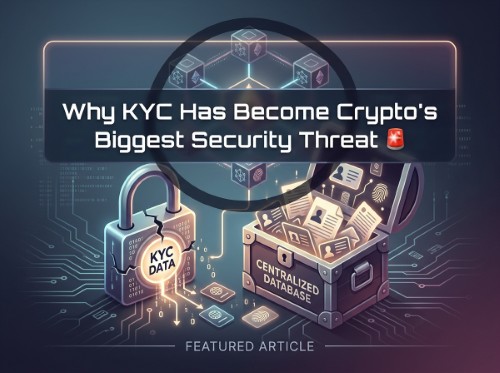
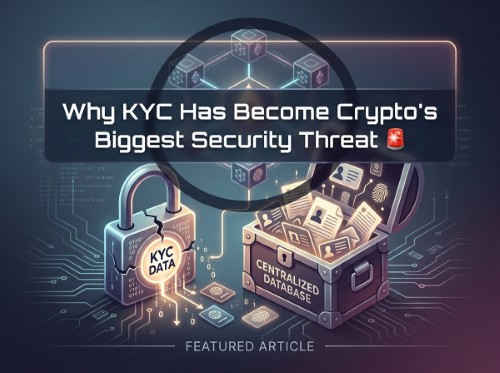
The recent compromise of Revolut's compliance procedures highlights a terrifying shift in digital security. Know Your Customer (KYC) regulations, ostensibly designed to prevent financial crime, have created centralized honeypots of personal information. When these vaults are compromised, the risk goes far beyond digital spam or phishing emails—it exposes individuals to direct physical extortion and real-world violence.
The breach occurred when an attacker gained control of an official Italian government email account operating within Italy's Posta Elettronica Certificata (PEC) network—specifically an address sitting on the Interior Ministry's domain. Because the email originated from a verified government domain, every standard technical authentication check passed without raising alarm bells.
Posing as a law enforcement agency, the criminal submitted fraudulent European Investigation Orders to Revolut Bank UAB, the Lithuanian-licensed entity holding European Union customer records.
Revolut's compliance division processed these orders over a six-month period. Built to respond swiftly to law enforcement mandates without alerting account holders, the compliance desk unintentionally facilitated the exfiltration. At times, staff even coached the attacker on how to correctly format the legal documentation when initial submissions contained errors.
Rather than leaking basic email addresses or marketing preferences, the compliance desk surrendered comprehensive identity dossiers, including:
What makes this incident particularly sinister is the sequence in which the attack was conducted. Blockchain security researchers confirmed that the victims were not selected at random; they were identified on-chain first.
By scanning public blockchain ledgers for substantial Bitcoin balances, the perpetrator curated a list of high-value targets. The fraudulent investigation orders were then crafted specifically to unmask those wallet addresses. The public blockchain revealed the wealth, while the bank's compliance desk supplied the face, full name, and physical home address.
Around 680 individuals were compromised. High-profile victims included former Mt Gox Chief Executive Mark Karpelès and Gamdom founder Felix Römer. In Römer’s case, extortion attempts began nearly seven weeks before Revolut formally issued notification letters to impacted users, meaning victims were alerted by the criminal before the financial institution disclosed the breach.
Operating under the moniker "I am not a villain", the perpetrator demanded a ransom of 6,000 Monero (valued at approximately $3 million) on a leak portal to prevent public publication of the files.
This breach is part of a broader, troubling trend across the financial and digital asset sectors. Centralised repositories of identity data consistently prove vulnerable to compromise:
When password credentials leak, users can reset them in seconds. However, when facial scans, national identity documents, and residential addresses are published online, that exposure is permanent.
The physical consequences are alarming. Security trackers have documented a sharp rise in targeted "wrench attacks", extortion schemes, and armed home invasions against known cryptocurrency holders across Western Europe. When criminal actors possess a precise map connecting crypto assets to physical doorsteps, the danger shifts directly from cyberspace to the real world.
This incident underscores a fundamental contradiction in modern financial regulation. Under European Union Anti-Money Laundering (AML) frameworks, financial services and crypto-asset service providers are legally obligated to collect and retain extensive customer due diligence files for five to ten years after an account is closed.
Frameworks such as the Transfer of Funds Regulation (the Travel Rule) and DAC8 tax reporting force institutions to continuously store and transmit comprehensive identity dossiers.
At the same time, data protection laws like GDPR mandate that personal data collection should be strictly minimal and limited to what is strictly necessary. In practice, regulatory pressure heavily favours data hoarding over privacy. Financial institutions are effectively compelled to build vast data vaults, yet they bear sole liability when those vaults are inevitable compromised.
The technology to verify an individual's legal status without retaining their raw documents already exists. Zero-Knowledge (ZK) cryptographic tools can prove that a passport is authentic straight from its embedded microchip without ever transmitting or storing a physical image of the document or revealing unnecessary personal details.
Until regulatory frameworks adopt privacy-preserving verification methods, the burden of security remains on the individual. The Revolut breach serves as a stark reminder of the core principle behind self-custody: sensitive personal data is only ever as secure as the fewest number of third parties holding it. Holding your own keys, minimising centralized data footprints, and maintaining strict operational privacy remain the most effective defences in an increasingly transparent digital landscape.
Coin Bureau - Revolut Just Proved KYC Is DANGEROUS
"Revolut didn’t get breached, they were tricked by a fake police email. For six months, attackers used stolen government mailboxes to demand full KYC files on wealthy crypto users. Passport scans, homes addresses, and full Bitcoin histories all walked out the door.
This video shows how EU rules made that possible, why your forced KYC is a personal risk, and how close regulators are to outlawing real privacy or deletion. If you need to protect your crypto identity, this is a must-watch."
~ TIMESTAMPS ~
0:00 Revolut’s KYC Nightmare
2:31 How The Fake Requests Worked
4:38 Victims Targeted & Blackmailed
7:18 This Has Happened Before
9:39 The KYC Rules Making It Worse
11:31 A Safer Alternative To KYC
Source 👉 https://www.youtube.com/watch?v=E2dhf7QxxrI
Disclaimer: This article is provided for informational purposes only, mistakes may be made, and it's not offered or intended to be used as legal, tax, investment, financial, or any other advice.