x




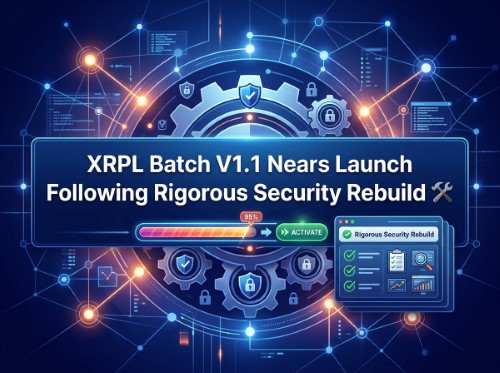
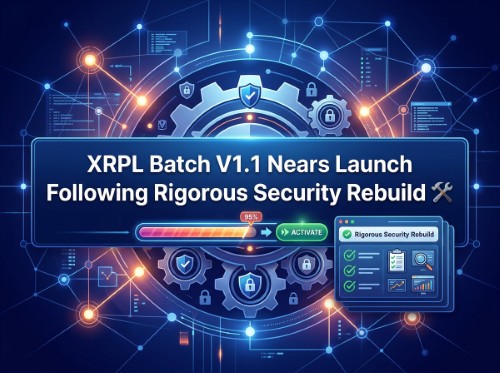
The XRP Ledger (XRPL) is on the verge of introducing one of its most anticipated structural upgrades to date. The proposed Batch V1.1 amendment (commonly associated with standard XLS-56) is currently standing just one vote short of the required 80% validator consensus. Hitting this critical threshold will trigger a mandatory 14-day activation countdown, paving the way for atomic multi-transaction processing directly on the ledger without relying on smart contracts.
However, the journey to this milestone has been anything but simple. Following the discovery of a high-severity flaw in the original Batch V1.0 release, developers and security auditors undertook an exhaustive infrastructure rebuild to ensure the feature meets institutional-grade security standards.
The original iteration, Batch V1.0, was designed to introduce atomic transaction execution to the XRP Ledger. However, during pre-mainnet testing in February, security researchers identified a critical logic error within the checkBatchSign function.
Under specific conditions, if a designated signer account did not yet exist on the ledger, the validation logic triggered an early return status of success. This architectural flaw could have allowed a malformed setup to pass validation without requiring the private key signatures of every involved account. Had this code reached the mainnet, malicious actors might have executed unauthorised transactions on behalf of third parties.
Because the flaw was discovered while the amendment was strictly on pre-mainnet test environments, no user funds or live ledger assets were ever exposed to risk. Nevertheless, RippleX developers immediately pulled the amendment to perform a full root-cause analysis and code overhaul, culminating in Batch V1.1, bundled within the xrpld 3.3.0 release.
To ensure the integrity of Batch V1.1, the engineering team subjected the new codebase to one of the most intense security review processes in XRPL history. Rather than relying on a single audit, the rebuild combined traditional peer reviews with advanced AI-assisted red-teaming.
The security protocol for Batch V1.1 included:
This multi-faceted review process resolved the initial signature bug while eliminating several other potential vulnerabilities across the ledger software. The team addressed issues relating to Multi-Purpose Token (MPT) validation bypasses, potential node crashing vectors, path size validation constraints, transaction hashing inconsistencies, and signer ordering logic.
At its core, XLS-56 introduces atomic execution logic to the XRP Ledger. In traditional blockchain interactions, executing a sequence of dependent actions across multiple accounts requires separate transactions, creating execution risk if one step succeeds while another fails.
Batch V1.1 changes this dynamic by allowing multiple transactions from different accounts to be bundled into a single ledger close with an "all-or-nothing" execution guarantee:
For any amendment to activate on the XRP Ledger, it must maintain at least 80% support from trusted UNL (Unique Node List) validators for a continuous 14-day window.
Current snapshot data reveals that 27 out of 35 trusted validators have cast their vote in favour of Batch V1.1, representing approximately 77% support. With eight validators currently voting against or withholding support, the amendment requires just one additional positive vote to cross the 80% mark and initiate the official 14-day activation timer.
This cautious voting behaviour reflects a broader culture of heightened risk awareness among XRPL validators. Following the recent pulling of the Permission Delegation amendment due to a pre-mainnet bug, community consensus has heavily prioritised thorough testing over rapid deployment.
The rollout of Batch V1.1 highlights a maturing infrastructure model for the XRP Ledger. Alongside the security rebuild, developer tooling has taken a major step forward with the launch of a dedicated XRPL testing dashboard. This platform provides real-time visibility into Devnet operations, tracking exactly which transaction types, payload fields, and result codes are exercised during testing cycles.
By pairing AI-driven red-teaming with transparent public dashboards and rigorous third-party audits, the XRP Ledger community is setting a high benchmark for Layer-1 protocol upgrades. Assuming the final validator vote is secured in the coming days, XRPL developers can look forward to natively building faster, safer, and more complex financial applications before the end of the year.
Disclaimer: This article is provided for informational purposes only, mistakes may be made, and it's not offered or intended to be used as legal, tax, investment, financial, or any other advice.