x




This Saturday, October 3, 2026, marks exactly 100 years since the first live radio report of a sports match aired in what was then Czechoslovakia.
A visionary experiment by the broadcaster Radiojournal—covering a match between Prague’s Slavia and the Hungarian club Hungaria Budapest — forever changed the perception of sports and laid the foundations for modern continental sports journalism.
A stroke of sheer coincidence helped bring about this historic milestone at Prague’s Letná stadium. The radio reporter originally scheduled for the assignment was daunted by the challenging task and failed to show up at the stadium altogether.
Consequently, Josef Laufer—Slavia’s international secretary at the time, who was originally meant to serve only as an advisor for the broadcast—stepped in at the last minute to take the microphone. Armed with deep sports knowledge and the ability to speak seven languages, Laufer instantly captivated listeners with his vivid and dynamic commentary on the action unfolding on the pitch.
The broadcast met with such an overwhelming response that, instead of the planned single half, the entire match—which Slavia won 2 : 1—was aired.
This debut on October 3, 1926, went down in history as the very first live football broadcast on the European continent.
The BBC in Britain did not air a similar report until three months later.
Josef Laufer became a legend practically overnight, his captivating voice subsequently accompanying Czechoslovak fans through the most famous sporting moments of the interwar era.
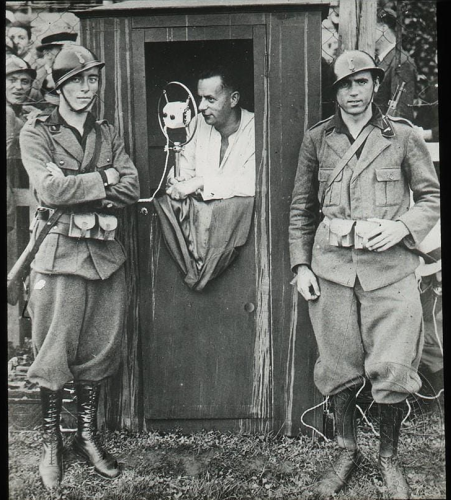 Laufer commentates the match Juventus Turin - Slavia Prague, Italy 1932
Josef Laufer later discribed the situation like this:
"The choice fell on me. It was just a trial run—and, by today’s standards, it’s unimaginable: only the first half was supposed to be broadcast! Just imagine! I talked non-stop, urged on by the technicians to avoid pauses and keep speaking without interruption. What a relief I felt when it was over. But then... enthusiastic listeners called the station, and although the director decided on the spot not to broadcast the rest, he couldn't halt the wave of popularity. The radio station bowed to the audience's wishes. Slavia won, and so did I ! The station offered me a permanent role, and Slavia agreed. That is how it all began for me and the radio,.
The public was thrilled by the live radio broadcast of the football match, as evidenced by the following press report: “Listeners could hear all the noise and commotion, expressions of enthusiasm and displeasure, the referee’s whistle, and even the calls of vendors selling sausages, cigarettes, coconut treats, and chewing gum. The reproduction of the action on the pitch was true to life and captivated the audience. One did not need to be an avid sports fan to find that the vivid, immediate, and critical commentary provided by Secretary Laufer—whose performance brilliantly showcased the quick-wittedness of a sports journalist—conveyed an undeniable sense of drama to every listener.”
Thanks for reading
Margaret
Source: Czech web