x




Because of soil depletion, crops grown decades ago were much richer in vitamins and minerals than the varieties most of us get today
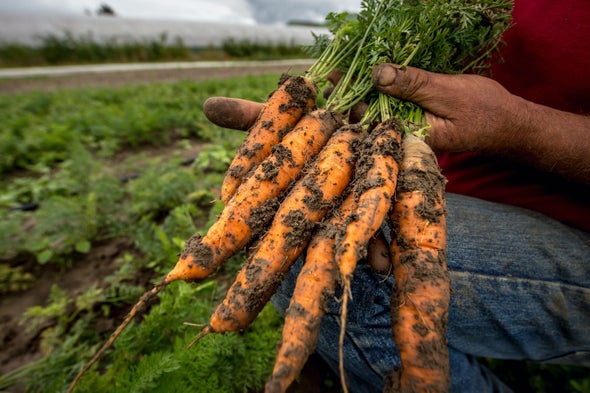
It would be overkill to say that the carrot you eat today has very little nutrition in it—especially compared to some of the other less healthy foods you likely also eat—but it is true that fruits and vegetables grown decades ago were much richer in vitamins and minerals than the varieties most of us get today. The main culprit in this disturbing nutritional trend is soil depletion: Modern intensive agricultural methods have stripped increasing amounts of nutrients from the soil in which the food we eat grows. Sadly, each successive generation of fast-growing, pest-resistant carrot is truly less good for you than the one before.
A landmark study on the topic by Donald Davis and his team of researchers from the University of Texas (UT) at Austin’s Department of Chemistry and Biochemistry was published in December 2004 in the Journal of the American College of Nutrition. They studied U.S. Department of Agriculture nutritional data from both 1950 and 1999 for 43 different vegetables and fruits, finding “reliable declines” in the amount of protein, calcium, phosphorus, iron, riboflavin (vitamin B2) and vitamin C over the past half century. Davis and his colleagues chalk up this declining nutritional content to the preponderance of agricultural practices designed to improve traits (size, growth rate, pest resistance) other than nutrition.
“Efforts to breed new varieties of crops that provide greater yield, pest resistance and climate adaptability have allowed crops to grow bigger and more rapidly,” reported Davis, “but their ability to manufacture or uptake nutrients has not kept pace with their rapid growth.” There have likely been declines in other nutrients, too, he said, such as magnesium, zinc and vitamins B-6 and E, but they were not studied in 1950 and more research is needed to find out how much less we are getting of these key vitamins and minerals.
The Organic Consumers Association cites several other studies with similar findings: A Kushi Institute analysis of nutrient data from 1975 to 1997 found that average calcium levels in 12 fresh vegetables dropped 27 percent; iron levels 37 percent; vitamin A levels 21 percent, and vitamin C levels 30 percent. A similar study of British nutrient data from 1930 to 1980, published in the British Food Journal,found that in 20 vegetables the average calcium content had declined 19 percent; iron 22 percent; and potassium 14 percent. Yet another study concluded that one would have to eat eight oranges today to derive the same amount of Vitamin A as our grandparents would have gotten from one.
What can be done? The key to healthier produce is healthier soil. Alternating fields between growing seasons to give land time to restore would be one important step. Also, foregoing pesticides and fertilizers in favor of organic growing methods is good for the soil, the produce and its consumers. Those who want to get the most nutritious fruits and vegetables should buy regularly from local organic farmers.
UT’s Davis warns that just because fruits and vegetables aren’t as healthy as they used to be doesn’t mean we should avoid them. “Vegetables are extraordinarily rich in nutrients and beneficial phytochemicals,” he reported. “They are still there, and vegetables and fruits are our best sources for these.”
Learn More: Click Here