x




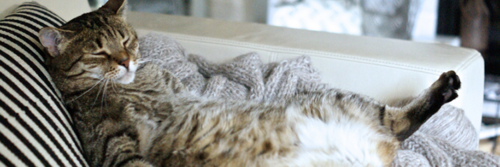
Garfield is cute, but his eating habits aren't. Surveys suggest that anywhere from 25% to 44% of our feline friends are very overweight—even obese. Heavy cats are prone to arthritis, diabetes, non-allergic skin problems and even decreased immunity. Just as in humans, obesity in cats is the result of consuming too many calories and using too little energy. In some cases, additional medical factors may come into play. Still, diet and exercise are the best ways to turn a fat cat into a sleek feline.
Most pet cats are strictly indoor cats or only go out on a leash—yes, some cats will walk on leashes. This means the average cat isn't outside hunting or braving the elements. The first step in helping an indoor cat exercise more is to provide more stimulation and playtime. Make a daily plan to drag a small catnip mouse or feather toy around the house for ten minutes a day as a start. Some cats will even fetch if you throw a small, lightweight toy that they can carry. You will quickly find that playing with your cat is fun for both of you.
Adding a second cat as a playmate can work well with young cats, especially if the newcomer is of the opposite sex. Even a dog or a house bunny can be a fun playmate for some cats.
Though many cats love to nibble on their kibble all day, it's best to put cats on a meal plan rather than let them feed freely. That way you know exactly how much your cat is eating. Food can be left down for a half hour, two or three times daily. Cats with health problems, such as diabetes, may need special dietary schedules, so check with your veterinarian before changing the feeding schedule.
What you feed your cat is as important as how much you feed. Cats are obligate carnivores, which means they need meat protein and don't digest carbohydrates very well. They metabolize protein better and even use protein as their energy source. This means any carbohydrates they eat are converted to fat—not a good scenario for an overweight kitty. Feline expert Dr. Jean Hofve stresses that cats do well on a "Catkins Diet"—high protein, moderate fat and few carbohydrates.
Canned foods are excellent for many cats because of the high protein content, extra fluid and low carbohydrates. With a wide variety of flavors available, you should be able to find something for even the most finicky kitty. If your cat swears by dry food and dry food alone, look for meat protein sources and low carbohydrate levels on the ingredients label.
Cats come in all shapes and sizes, so how can you be sure that Fluffy is truly overweight and not just "big boned"?
After looking at your cat objectively, you might decide Fluffy is overweight. Should you start her on an immediate diet, cold turkey? No! Cats can't go without eating like a dog or a person can. In just 24 to 48 hours without food, a cat may develop hepatic lipidosis, a serious liver disease. Make all food adjustments gradually. A cat should not lose more than 1% of her weight per week. Get a digital baby scale or weigh her by holding her and weighing both of you on a human scale, then weighing yourself alone and subtracting the difference.
Start by switching Fluffy to meals if she has been free feeding. Then reduce her daily food ration slowly as you increase her exercise. The weekly weigh-ins will let you know if you're on the right track.
The bottom line is that cats can be healthier if they're at the correct weight. It's our responsibility as owners to help our kitties by increasing their exercise, planning meals, and choosing healthy foods—the same recipe for success as human weight loss.
.jpg)