x




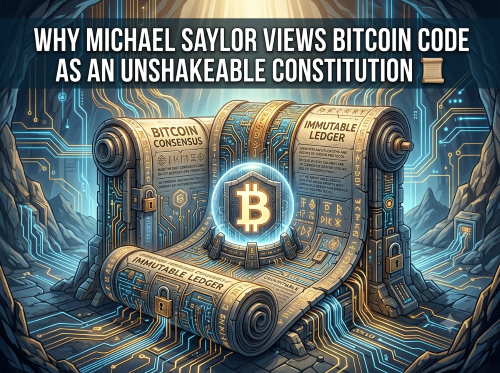
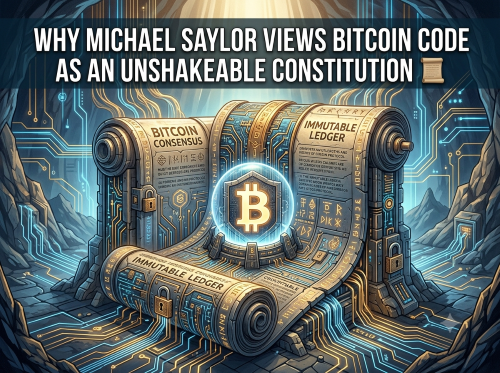
The ongoing debate surrounding Bitcoin’s governance and protocol updates has reached a high-stakes crossroads. MicroStrategy executive chairman Michael Saylor has dramatically escalated his commentary on the network’s future, framing its consensus rules not merely as software parameters, but as an unshakeable digital constitution.
In a nine-post thread published on X, Saylor declared that internal governance disputes present a far greater existential threat to Bitcoin than any external pressure. His core argument is simple yet profound: modifying Bitcoin’s base layer to suit the ambitions or preferences of any particular group is tantamount to infringing upon the fundamental economic rights of every network participant.
Bitcoin has won. Now it must survive victory.
— Michael Saylor (@saylor) July 28, 2026
Its gravest threat is not an enemy at the gates, but corruption from within: factions that invent pretexts, rewrite the rules, and seize economic rights until freedom becomes permission and law becomes loot.
For Saylor, Bitcoin’s consensus rules—the shared system of validation logic that nodes and miners enforce—serve as the foundational legal framework of the digital monetary ecosystem. In his view, altering these rules for short-term convenience transforms economic freedom into permissioned access and undermines the predictable nature of decentralised property rights.
Saylor cautioned that the primary danger facing the asset comes from internal factions attempting to rewrite the fundamental rules under various pretexts. By treating the consensus code as a constitution, he argues that protocol changes must remain extremely conservative, rare, and dictated solely by absolute technical necessity rather than ideological ambition.
Saylor’s recent comments mark a significant expansion of his pushback against base-layer changes. Previously, his focus was directed squarely at Bitcoin Improvement Proposal 110 (BIP-110), a proposal designed to temporarily restrict non-financial data—such as Ordinals inscriptions and arbitrary digital tokens—from being permanently recorded on the blockchain for roughly one year.
After publishing a extensive critique titled 110 Reasons BIP 110 Is a Bad Idea, Saylor has now broadened his stance. He groups BIP-110 together with other proposed protocol changes, including smart-contract-style covenants (which pre-program how funds can be spent in the future) and larger block size proposals aimed at increasing transaction throughput.
Despite their different technical mechanisms, Saylor classifies all three under the same banner: factional attempts to impose new rules, risks, and operational costs on the entire Bitcoin network.
The debate over BIP-110 highlights a long-standing ideological divide within the developer and node community. Spearheaded by pseudonymous author Dathon Ohm and prominent Bitcoin developer Luke Dashjr, BIP-110 is supported by node operators concerned about the long-term strain arbitrary data places on the blockchain.
Advocates contend that while miners receive immediate one-time transaction fees for including data-heavy inscriptions, full node operators are left bearing the perpetual burdens of expanded storage, higher bandwidth, and increased validation resource requirements. From their perspective, restricting non-financial data is a necessary measure to protect the public capacity of the blockchain rather than an act of censorship.
However, despite the passionate argument from its proponents, BIP-110 faces near-insurmountable hurdles toward adoption. With its mandatory signalling window opening around 9 August at block 961,632, miner signalling sits at approximately 2.64%—well below the 55% consensus threshold required for activation.
Saylor’s constitutional metaphor taps into one of the most vital ideological questions in cryptocurrency today: should Bitcoin ossify into a completely rigid, immutable base layer, or should it evolve gradually through carefully crafted softforks?
Saylor’s latest intervention sends a clear signal to the market: for institutional champions of digital gold, keeping the base layer immutable is the ultimate defence against protocol decay.
For more details on this story, you can read the original reporting on Decrypt:
👉 Michael Saylor: Bitcoin Code Is a Constitution, Changes Are Attacks on 'Economic Rights'
Disclaimer: This article is provided for informational purposes only, mistakes may be made, and it's not offered or intended to be used as legal, tax, investment, financial, or any other advice.